
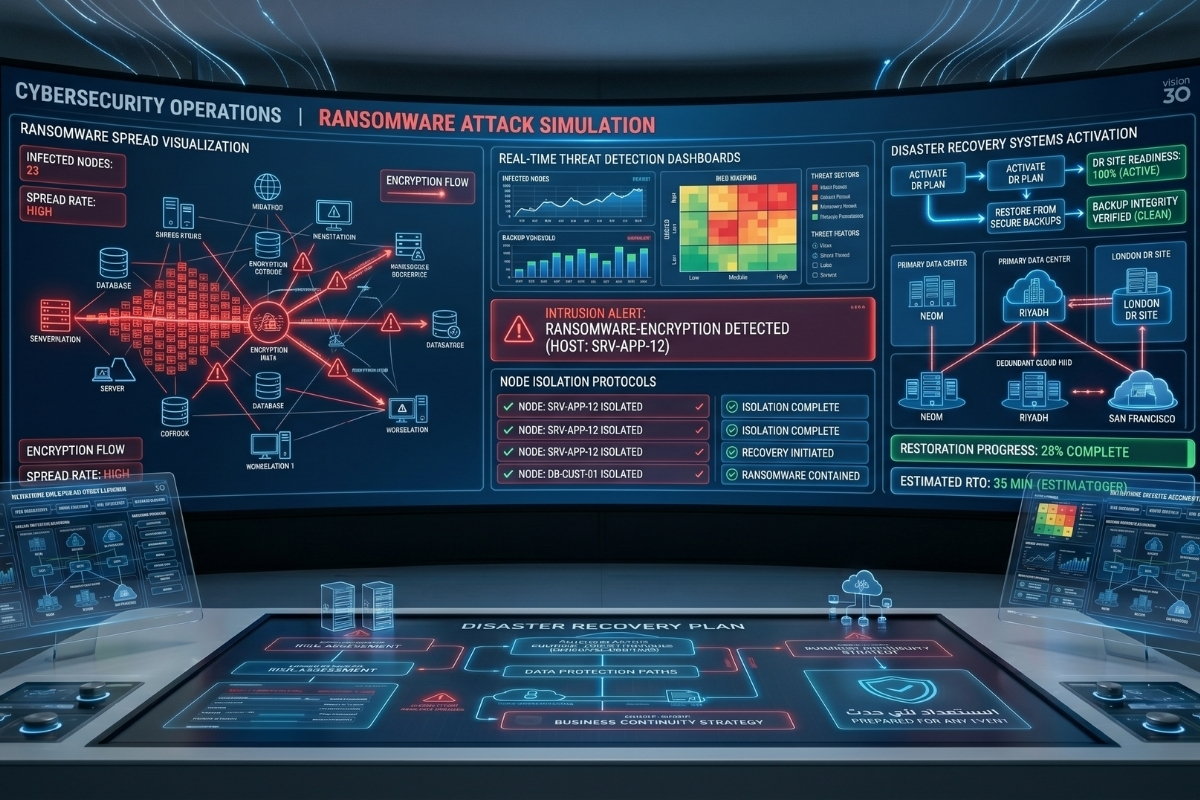
Introduction
Unexpected IT downtime is one of the most expensive challenges businesses face today. From lost revenue and reduced productivity to reputational damage, the impact can be severe. A well-implemented Disaster Recovery strategy plays a vital role in minimizing financial losses and protecting long-term business stability.
The Real Cost of Downtime
Downtime affects businesses in multiple ways:
- Lost sales and revenue
- Employee productivity loss
- Customer dissatisfaction
- Penalties for non-compliance
- Long-term damage to brand reputation
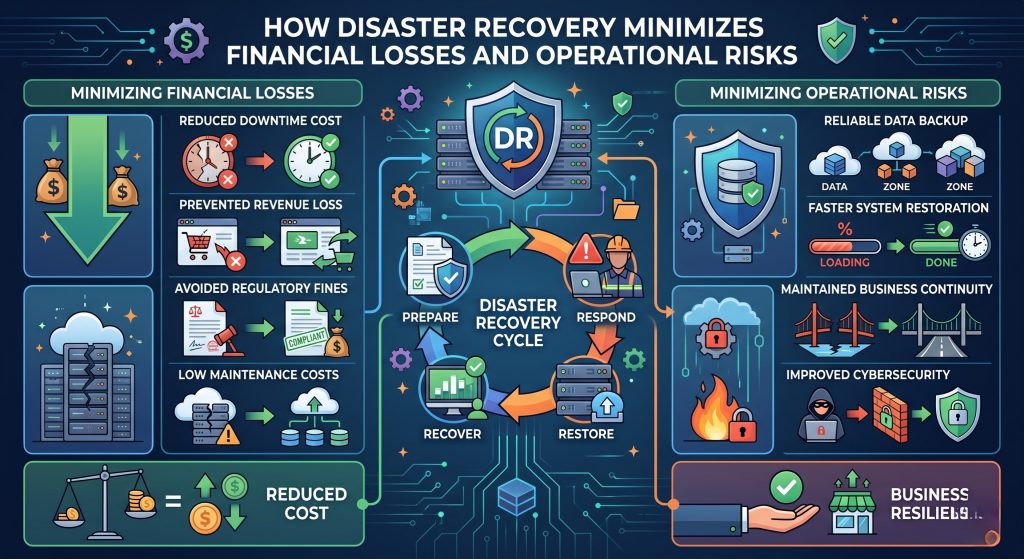
According to industry studies, even a single hour of downtime can cost businesses thousands—or even millions—of dollars.
How Disaster Recovery Reduces Financial Impact
Disaster Recovery solutions are designed to:
- Restore systems quickly
- Reduce data loss
- Maintain service availability
- Prevent extended operational shutdowns
By minimizing Recovery Time Objective (RTO) and Recovery Point Objective (RPO), businesses significantly reduce the financial consequences of disruptions.
Proactive Risk Management
Disaster Recovery is not just a reactive solution—it is a proactive risk management strategy. By identifying vulnerabilities and planning recovery in advance, businesses can avoid costly surprises.
Conclusion
Investing in Disaster Recovery is far less expensive than dealing with the aftermath of an unplanned IT disaster. It is a smart financial decision that protects both revenue and reputation.