
Introduction
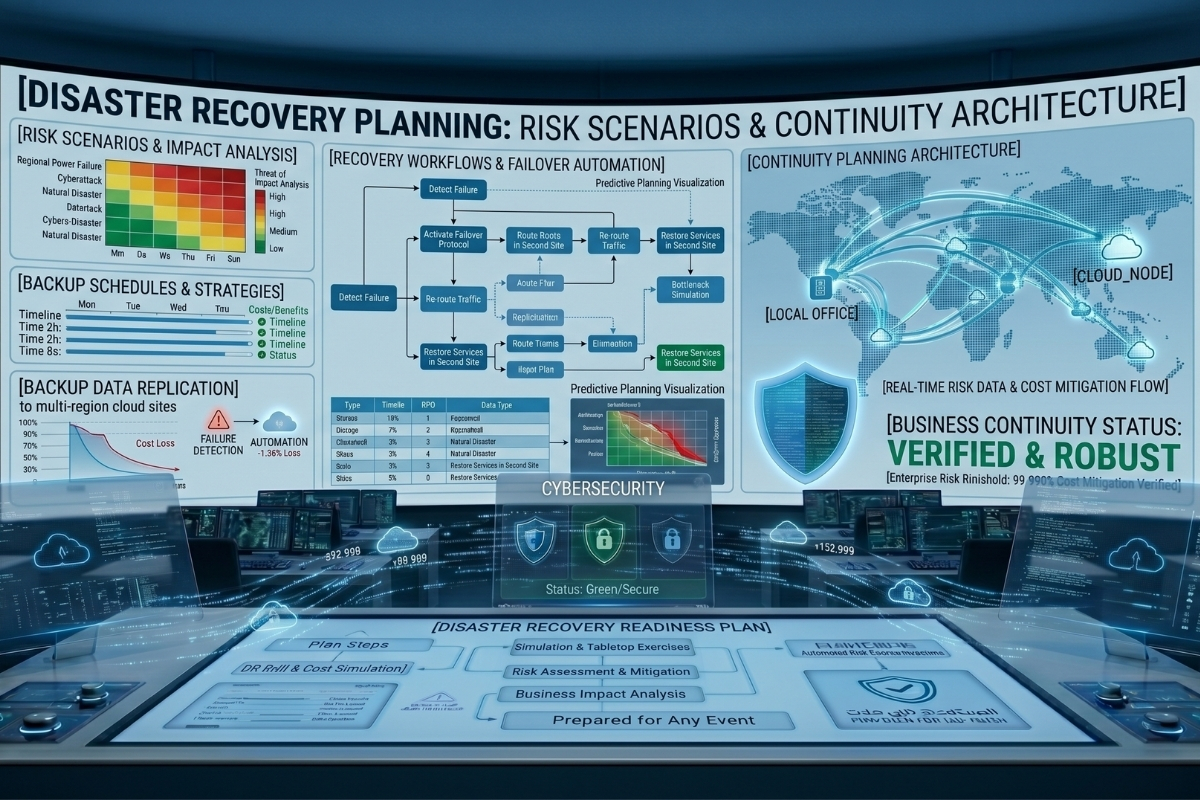
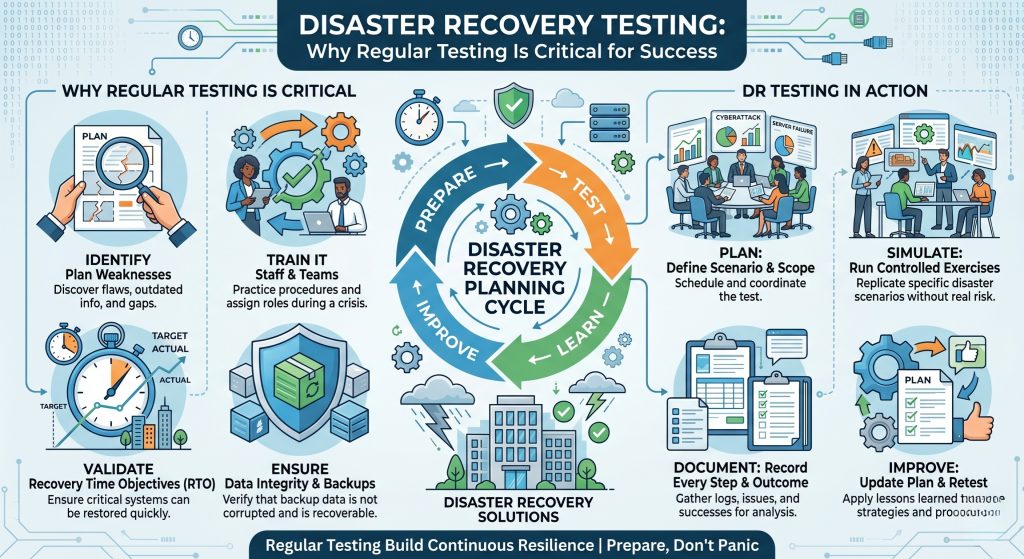
A Disaster Recovery Plan that hasn’t been tested is a plan that cannot be trusted. Regular Disaster Recovery testing ensures that recovery processes will work when a real incident occurs.
Why Disaster Recovery Testing Matters
Testing helps organizations:
- Identify gaps and weaknesses
- Validate recovery timelines
- Ensure staff readiness
- Meet compliance requirements
Types of Disaster Recovery Tests
- Tabletop testing (discussion-based scenarios)
- Simulation testing (partial system recovery)
- Full failover testing (complete recovery environment activation)
Risks of Not Testing
- Extended downtime
- Data loss
- Failed recovery processes
- Increased financial impact
Best Practices for DR Testing
- Schedule regular testing
- Document results and improvements
- Update plans after system changes
- Work with experienced IT providers
Conclusion
Disaster Recovery testing transforms a theoretical plan into a reliable, real-world solution.